Claim and historical setting
Israel, the Second Temple period and later rabbinic authority
First distinguish the inspired Old Testament and ancient covenant history from Second Temple schools and the later rabbinic system formed after the destruction of the Temple. The historical question is whether the promises, priesthood, sacrifice and messianic expectations reach their fulfilment in Jesus or can remain indefinitely open after Him. Later commentary must be measured against the earlier revelation it interprets, not treated as an independent parallel revelation.
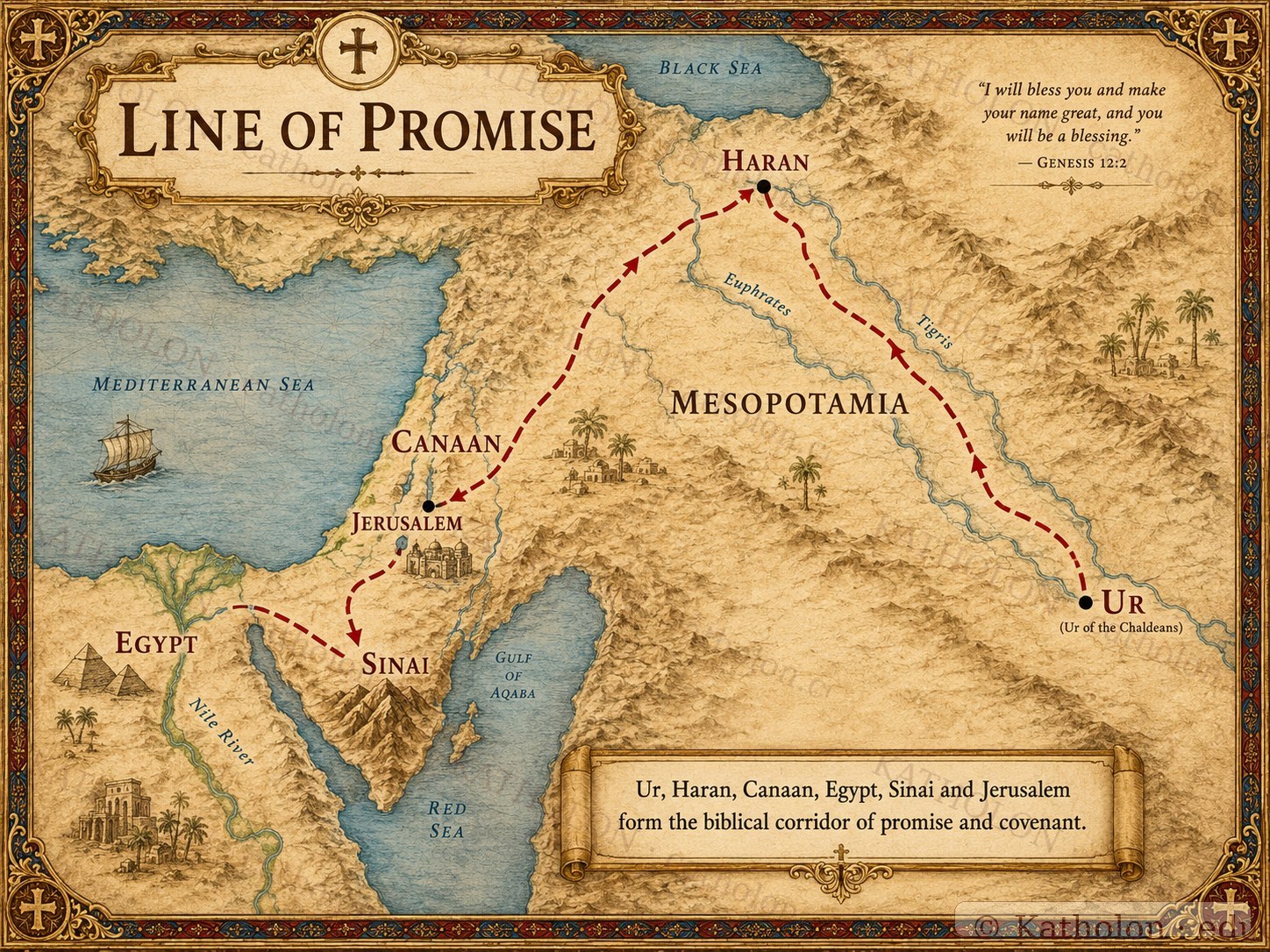
The historical inquiry begins from the public claim contained in Israel’s own sources: God chose Abraham, delivered Israel from Egypt, gave the Torah, established priesthood and sacrifice, raised up David and spoke through the prophets. These events and texts are not external background later borrowed by Christians. They form the Old Testament received by the Church as inspired Scripture and the historical grammar within which Jesus identifies his mission.
The Jewish world of Jesus was not uniform. The Temple priesthood, Pharisaic teachers, Sadducees, Essenes, apocalyptic groups, synagogue communities and Jews of the diaspora differed in canon, purity, resurrection, politics and messianic expectation. Jesus, Mary, the Twelve and the earliest Church were Jewish; thousands of Jews received the Gospel, while many others—including powerful Jerusalem authorities—rejected Jesus’ claim and participated in his condemnation. The New Testament records this conflict without making every Jew of every age collectively guilty.
The decisive Christian claim to be tested is fulfilment. The New Covenant does not abolish God’s truthfulness or transform Israel’s Scriptures into Christian property by force. In Christ, promises concerning Abraham, David, the servant, covenant, sacrifice, temple and the gathering of the nations reach the reality toward which they were ordered. Gentile believers enter this history by grace and are warned by Saint Paul not to boast against the natural branches.
Rabbinic Judaism after the destruction of the Temple is a historically serious and internally diverse civilization, but it is not simply identical with the religion of Moses or the whole Second Temple world. It reconstructs Jewish life without sacrifice and without accepting Jesus as Messiah. A sound historical examination must therefore compare biblical, Second Temple, apostolic and rabbinic sources in their order rather than treating “Judaism” as a timeless single system; the Catholic judgement follows only after that chronology is established.
The page also rejects every racial, political or conspiratorial deformation of the theological question. The crucifixion is the saving death freely embraced by Christ for the sins of all mankind; Roman and Jewish actors had distinct historical roles; personal guilt belongs to persons, not bloodlines. The Church’s mission to Jews must be clear about Christ and equally clear against contempt, coercion and antisemitism.