
1 · UNDERSTAND
What does this tradition claim?
Islam confesses one Creator, reveres Abraham, honours Jesus and Mary in its own way, and orders prayer, fasting, almsgiving and community life around the Qurʾān and the example attributed to Muhammad.
Islam · Qurʾān, prophetia et persona Christi
Islam presents the Qurʾān as a final correction of the religion of Abraham, Moses and Jesus. Because the claim is later, it must account for the already public covenantal and apostolic record rather than simply replacing that record by assertion.
The decisive questions concern the Trinity, Incarnation, Crucifixion, Resurrection, prophecy, Scripture and the Church: can a message that contradicts the prior public revelation be its restoration, and can God permit the true religion to disappear for centuries before restoring it without visible continuity?

START HERE · FOR THE SEARCHER
First identify the claim, the date of its controlling sources and the account it gives of God, man, moral law and the final end. Test it by reason and public history before comparing it with prior revelation, Jesus Christ and the apostolic Church.
1 · UNDERSTAND
Islam confesses one Creator, reveres Abraham, honours Jesus and Mary in its own way, and orders prayer, fasting, almsgiving and community life around the Qurʾān and the example attributed to Muhammad.
2 · WHY IT MATTERS
The issue reaches the identity of God and Jesus, the meaning of the Cross and the authority of revelation. A later message that revises the apostolic witness must provide proportionate public grounds because it changes the proposed way of salvation.
3 · WHERE THE EVIDENCE LEADS
Islam is a seventh-century corrective claim. It repeats truths already known from reason and earlier revelation, yet contradicts the public apostolic witness concerning the Trinity, Incarnation, Cross and Resurrection. A later assertion without proportionate public credentials cannot annul the earlier revelation it claims to confirm.
READ IN THIS ORDER
This optional layer verifies the conclusion instead of merely repeating it. It identifies the controlling terms, dates the decisive witnesses, links the primary texts and states which premise the strongest contrary case must deny.
TERMS AND SCOPE
Islam understands itself as the final restoration of Abrahamic monotheism through the Qurʾān given to Muhammad. Its own account must be presented accurately before the chronology, textual evidence and theological contradictions are examined.
Open Islam: Qurʾān, prophecy, law and the identity of ChristCHRONOLOGICAL CONTROL
Keep the layers distinct: the seventh-century Qurʾānic proclamation, early manuscripts and inscriptions, the later Sīra and Hadith collections, classical law and theology, and modern apologetic harmonisations. A later tradition cannot silently be inserted into the earliest documentary layer.
Open Islamic sources and institutions must be placed in chronological layersPRIMARY EVIDENCE
The source order is crucial: Qurʾānic text, early manuscripts, hadith and sīra, then legal and theological commentary, compared with the prior apostolic corpus.
STRONGEST CONTRARY CASE
These answers state the method before polemical claims are examined in detail.
Open The strongest objections answered directlyDegree of certainty. Metaphysical contradictions can be judged by reason; dates, authorship and transmission receive historical degrees of certainty. The final religious judgement is cumulative: a later claim must not contradict truths already established by reason or a prior public revelation without proportionate evidence.
Religion profile
Islam arose in western Arabia in the early seventh century around Muhammad of Mecca. According to Islamic tradition, he received messages from God through the angel Gabriel; these revelations were recited in Arabic and later gathered as the Qurʾān. Muhammad preached worship of the one God, formed a community first in Mecca and then in Medina, acted as religious and political leader, and died in 632.
Islam teaches that there is one God, that Abraham, Moses and Jesus were true prophets, and that Muhammad is the final prophet. Religious life is commonly summarized by the profession of faith, ritual prayer, almsgiving, fasting in Ramadan and pilgrimage to Mecca, together with a wider moral and legal order derived from the Qurʾān, the Sunna and later scholarship. After Muhammad’s death, Muslim rule expanded rapidly beyond Arabia, and Islam developed into a worldwide civilization with Sunni, Shia, legal, theological and mystical traditions.
AT A GLANCE
Use these cards as a quick reference for origin, authorities, central beliefs, worship and historical development. The continuous overview above gives the basic story; the later sections examine the evidence in detail.
Islamic tradition places his prophetic mission in Mecca and Medina in the early seventh century.
The first Muslim community formed in the Arabian religious, tribal and commercial world.
Islam presents itself as the primordial faith of Abraham and the final correction of prior communities.
The Qurʾān, hadith, legal methods and scholarly traditions are related differently across Sunni, Shia and other schools.
God is one without partner; Muhammad is regarded as the seal of the prophets.
Profession of faith, prayer, almsgiving, fasting and pilgrimage structure religious life within a broader legal-moral order.
Mainstream Islam venerates Jesus and Mary while denying the Incarnation and, in its dominant reading, the Crucifixion.
Conquest, trade, scholarship, migration and mission carried Islam across Africa, Asia, Europe and the wider world.
The Qurʾān is received as God’s final, protected speech in Arabic; Muhammad is the definitive prophetic messenger; the community is ordered by worship, moral obedience and law. Sunni and Shia traditions differ over authority and early succession, while legal, theological and mystical schools introduce further diversity.
Creation, judgement, prophecy, angels, prayer, fasting, almsgiving and pilgrimage belong to the common structure. The decisive Christian dispute concerns the Trinity, divine Sonship, the Cross, Resurrection and the assertion that earlier biblical revelation was corrupted or misread.
Claim and historical setting
First identify the Qurʾān, the earliest evidence for Muhammad, the later Hadith and Sīra, and the distinct authority assigned to each source. Then test the Islamic account of God, prophecy, moral law and salvation by reason and chronology. Because Islam appears centuries after the apostolic witness and revises the identity, Cross and Resurrection of Christ, the burden of proof lies on the later corrective claim; sincerity, discipline and political success cannot supply that proof.
Islam is a complex religious civilization rather than a single slogan. The Qurʾān, reports about Muhammad, the Sunna, legal schools, theology, philosophy, Sufism and political history possess different dates and forms of authority. Sunni, Shiʿi, Ibadi and other communities disagree over succession and sources. A serious historical examination therefore begins by identifying which text or school is speaking.
The deepest dispute is Christological. Islam honours Jesus as Messiah, word from God and son of Mary, but ordinarily denies his divine sonship, crucifixion and redemptive Resurrection. These denials do not concern marginal Christian developments. They contradict the earliest apostolic proclamation and the identity of the Gospel itself. A text appearing six centuries later bears the burden of explaining why earlier Jewish and Christian witnesses, manuscripts and worship should be overturned.
Catholic theology also recognizes shared propositions and inherited points of comparison. Muslims confess one creator, associate themselves with Abraham, practise prayer, fasting and almsgiving, and honour Mary. Such truths and virtues deserve accurate recognition. Yet the divine unity confessed by the Church is Trinitarian; the one God is Father, Son and Holy Spirit, not a solitary monad, and the Son’s Incarnation is not polytheistic division.
Historical questions matter. The traditional biographies of Muhammad and major hadith collections were compiled after the earliest conquests; Qurʾānic manuscripts provide important evidence but do not automatically settle every later narrative about collection and interpretation. Islamic law and politics developed through juristic reasoning, empire and institutional debate. These layers should be presented with the same chronological care applied to Christian sources.
The rational and historical judgement must avoid both hatred of persons and flattery of a claim. Genuine assent cannot be manufactured by force, yet error as such acquires no moral right against truth. Civil authority may prudently tolerate false worship to prevent greater disorder, but toleration does not make contradictory religions equal paths to God. The question here is whether Islam’s later corrective claim is true and proportionately authenticated.
Historical method
The Qurʾānic proclamation, early empire, hadith canonization and later legal or mystical traditions are related but not contemporaneous.
c. 570–622
Islamic tradition situates Muhammad’s birth and first revelations in Mecca. Qurʾānic passages associated with this period emphasize judgement, monotheism, prophetic warning and continuity with earlier figures.
622–632
The migration marks a community with worship, law, warfare and diplomacy. Relations with Jewish tribes, Christians and Arabian opponents appear in Islamic sources and require careful chronological and source criticism.
632–750
Disputes over leadership, the first civil wars, rapid conquest and Umayyad rule shape Sunni and Shiʿi memory. Islamic reports associate the standard consonantal Qurʾānic text with the caliph ʿUthmān.
8th–10th centuries
Major collections and schools take form, debating predestination, divine attributes, reason, revelation and political authority. These later corpora are indispensable but should not be treated as contemporary transcripts without analysis.
Medieval civilizations
Muslim societies develop universities, courts, philosophy, science, poetry and mystical orders across Arabic, Persian, Turkish, African and Asian worlds. Christian and Jewish communities live under varying forms of protection and restriction.
Modern period
Modernists, Islamists, Salafis, nationalists and secular states offer competing responses to modern power. Global migration makes questions of reciprocity, family law, conversion and public religion newly immediate.
How to reach a judgement
Islam presents itself not as an unrelated religion but as the restoration of Abrahamic faith. That claim creates an unusually clear order of inquiry: first establish what the Qurʾān, early Islamic tradition and public history can support; then compare the later denial of central Christian events with the earlier Jewish and apostolic witnesses.
FIRST QUESTION · REASON AND PUBLIC HISTORY
The rational examination begins from publicly accessible evidence, ordinary logic and historical method. It asks what burden of proof belongs to the Qurʾān and to a seventh-century claim to correct earlier revelation. It asks what burden of proof belongs to a seventh-century corrective message, how the relevant sources developed and whether the proposed correction explains the earlier evidence better than the Christianity it denies.
Islam claims continuity with Abraham, Moses, the prophets and Jesus while correcting Jewish and Christian belief. A later correction cannot simply assume that every contrary earlier witness has been corrupted. It must identify when, where and how the alleged corruption occurred, and it must account for manuscripts, liturgies and citations dispersed among communities that were often independent or hostile to one another.
This is a chronological principle before it is a confessional one. A later source can illuminate an earlier event, but contradiction requires proportionate evidence. The wider and earlier the documentary agreement, the heavier the burden placed upon the later denial.
The earliest Islamic community expanded with remarkable speed, but victory, cohesion and civilizational achievement are not self-authenticating signs of divine revelation. Empires, reform movements and ideologies can prosper for many natural reasons. The prophetic claim must therefore be examined through the content of the message, the quality of its signs and the reliability of the sources that transmit the founding history.
The sīra, hadith collections and later biographies preserve indispensable Islamic memory, yet they belong to different genres and dates. Responsible study distinguishes the Qurʾānic text from later narrative elaboration and avoids treating every traditional report as equally early.
Detailed study: Arabia, Muhammad and early Islamic history →
Muslim confidence in the Qurʾān’s preservation is a serious claim, not a substitute for textual inquiry. Manuscripts, recitational variants, reports of collection and standardization, and the relation between consonantal text and later reading traditions all belong to the evidence.
Textual history does not by itself refute inspiration. It does, however, prevent an apologetic double standard in which every variant in the Bible is treated as corruption while the transmission history of the Qurʾān is placed beyond examination.
Detailed study: collection and textual history of the Qurʾān →
The death of Jesus by crucifixion is embedded in multiple early Christian witnesses and is presupposed by the earliest proclamation of the Resurrection. It also fits the public Roman and Jewish setting of the first century. A much later ambiguous denial cannot erase that convergence merely by claiming divine correction.
The decisive issue is not whether God could rescue a prophet. It is whether the Islamic reconstruction explains the origin of the apostolic message, the willingness of witnesses to suffer for it, and the immediate centrality of Cross and Resurrection better than the first-century sources do.
A revealed law cannot become good merely because a community attributes it to God. Questions of marriage, coercion, war, apostasy, testimony and the status of religious minorities must be examined through the nature of the person, justice, proportionality and the difference between moral law and historically conditioned civil provisions.
The same standard applies to Christian societies and Muslim societies. Historical abuse does not settle doctrine, but neither may doctrinal texts be insulated from moral analysis by an appeal to cultural difference.
Detailed study: apostasy, conscience, coercion and civil toleration →
Necessary distinction
Three questions that modern language often confuses must be separated.
Faith is an act of intellect and will moved by grace. Physical compulsion can produce an outward gesture, never supernatural assent. No one is made Catholic by violence.
A false proposition does not obtain a claim against truth merely because it is sincerely held. The dignity of the person and the falsity of the belief must not be confused.
Public authority may tolerate false worship when suppression would produce greater evils or disturb the common good. Such permission is not approval, equality of religions or religious indifferentism.
SECOND QUESTION · THE FULL CATHOLIC ANSWER
Once the prior revelation and apostolic witness are admitted into the inquiry, the dispute is no longer generic monotheism against polytheism. It concerns whether the one God has revealed His inner life, assumed human nature and reconciled mankind through the Cross and Resurrection.
Catholic doctrine confesses one simple divine nature, not three gods, parts or partners. Father, Son and Holy Spirit are personally distinct relations subsisting in the one undivided Godhead. The Muslim objection often rejects tritheism or biological generation, both of which Christianity also rejects.
Natural reason reaches the unity and transcendence of God; revelation discloses that the one divine life is not solitary. Mystery exceeds comprehension without contradicting unity.
The eternal Son does not cease to be divine, acquire a consort or become one mixed nature. He assumes a complete human nature, so that the one person acts truly as God and truly as man. Divine transcendence is not threatened by a free act of condescension.
The Qurʾānic honour given to Jesus—Messiah, word from God and son of Mary—therefore opens rather than closes the historical question. The apostolic witnesses must be allowed to explain the titles and deeds they transmitted.
Christian salvation is not based upon a private esoteric teaching later imposed on Jesus. The apostolic proclamation announces that the crucified Lord rose bodily, appeared to witnesses and commissioned a visible mission. The Cross reveals both the gravity of sin and the gratuity of divine mercy.
To deny these events is to contradict the foundation upon which the prior Christian community was publicly constituted. A later revelation would require signs at least proportionate to that reversal.
Human obedience is necessary, but no finite performance can generate supernatural communion with God. Catholic doctrine distinguishes created nature, sin, justification, merit under grace and the filial life given through Christ. Mercy does not disregard justice; it heals and elevates the person through a gift that precedes every saving act.
This gives a different shape to assurance and judgement. The believer neither presumes upon a bare declaration nor remains within an impersonal calculation, but lives by infused charity, sacrament, repentance and hope.
Christ entrusts doctrine, worship and sacramental authority to a visible apostolic body. Scripture arises within that community and remains joined to Tradition and a living rule of faith. This continuity makes a total apostasy before Islam historically and theologically unnecessary.
Because faith is an act of intellect and will moved by grace, it cannot be produced by force. The Church may judge error and protect the common good while affirming that conversion must be free and that every person retains a natural dignity and moral responsibility.
Continuity synthesis
Restauratio proposita · revelatio prior · contradictio
The burden of proof belongs to the later corrective claim, especially where it denies the central events on which the earlier covenant and apostolic witness converge.
Islam does not present itself as an unrelated local cult. It claims Abraham, Moses, the prophets and Jesus, and it describes the Qurʾān as confirmation and correction. This creates an objective test. A later message must agree with what God publicly revealed before it, or demonstrate by proportionate divine signs why the earlier record was universally corrupted. Mere assertion that Jews and Christians altered their books cannot overturn manuscripts, liturgy, patristic citation and communities spread across mutually independent regions before the rise of Islam.
The Abrahamic line itself does not begin with Abraham as though God had left the earlier human race without revealed worship. It reaches back through Noah, Abel and the first parents: one Creator, one moral order, sacrifice, judgement, promise and covenant form a continuous history before Israel. A genuine restoration of Abrahamic religion must therefore preserve that whole line and its divinely attested fulfilment, not select Abraham while contradicting the revelation that proceeds from him through Israel to Christ.
The contradictions concern the centre, not details. The New Testament and the earliest Christian worship confess the eternal Son, Incarnation, Crucifixion, bodily Resurrection and redemptive sacrifice. Islam denies divine Sonship and the Cross as Christians understand them. If those apostolic claims were false, then Christ’s disciples, martyrs, churches and Scriptures fell immediately into error; if they were true, a later revelation cannot deny them because God does not contradict Himself.
The appeal to restoration also conflicts with providence. From Christ to Muhammad there were six centuries of visible churches, bishops, sacraments, councils, missions and public worship. To say that the true religion disappeared during that interval means that Christ’s promises failed and that generations were required to follow a corrupted revelation until a new message arose outside the apostolic ministry. This is incompatible with the goodness and fidelity of God established by natural theology and with the indefectibility promised by Christ.
Islam preserves genuine truths: one Creator, judgement, prayer, fasting, almsgiving, moral accountability and reverence for Abraham and Jesus. Those truths explain its seriousness, but they do not authenticate the system. They were already known in the biblical and Christian tradition from which Islam historically emerged. The specifically Islamic corrections must be tested by the prior revelation, and at the decisive points they contradict it.
Islam is therefore false as the final restoration of the religion of Abraham. It begins centuries after the apostolic revelation, cannot demonstrate an unbroken ministry or sacramental continuity from Christ, and denies public facts and doctrines already witnessed before its origin. Its retained truths belong to the earlier revelation; its distinctive contradictions cannot come from the same God.
Difficult questions
These answers state the method before polemical claims are examined in detail.
The answer requires several distinctions.
Objection stated at full strength. Both intend the one creator of Abraham; therefore doctrinal differences are secondary.
Catholic reply. There is a real objective and intentional reference to the one creator in Muslim monotheism, but the Muslim conception denies truths about the same God’s Trinitarian life and Incarnation. Identity of intended referent does not make every predicate true or every worship equally complete.
Necessary distinction. Distinguish reference to the one creator, adequacy of concept, and fullness of revealed worship.
A broad corruption thesis bears a historical burden.
Objection stated at full strength. The Qurʾān corrects Jewish and Christian Scriptures that no longer preserve the original revelation.
Catholic reply. Manuscripts, translations and patristic citations before Islam already attest the central narratives Islam disputes. Textual variants exist, but no evidence demonstrates a wholesale replacement of Torah and Gospel across hostile and geographically dispersed communities.
Necessary distinction. Distinguish textual variation, interpretive error and total loss of a prior revelation.
The claim must be judged by content, signs and relation to prior revelation.
Objection stated at full strength. The Qurʾān’s eloquence, success and monotheism establish Muhammad’s divine mission.
Catholic reply. Literary power and political success do not by themselves prove prophecy. A claimant who contradicts the established Incarnation, Cross and Resurrection cannot be accepted as a prophet of the same God without evidence greater than the prior apostolic witness.
Necessary distinction. Distinguish moral or political leadership from supernatural prophetic authority.
Faith cannot be produced by force; civil toleration does not abolish the duty to profess and preach the true religion.
Objection stated at full strength. Christians should restrict public discussion to common civic concerns and avoid the question of conversion.
Catholic reply. Truthful controversy must identify the exact point of agreement and contradiction. Catholics must preach Christ without attempting to manufacture faith by force, must oppose private violence and arbitrary penalties, and must protect converts from coercion; none of this confers a moral right upon religious error or places Islam and the Catholic faith on equal terms.
Necessary distinction. Distinguish peaceful coexistence from doctrinal indifferentism.
Verify the answer
The source order is crucial: Qurʾānic text, early manuscripts, hadith and sīra, then legal and theological commentary, compared with the prior apostolic corpus.
Searchable Arabic text and translations.
Open sourceMajor Sunni hadith collections in translation.
Open sourceManuscript, chronology and intertextual research resources.
Open sourceUniversity manuscript information.
Open sourceEarlier Christian primary sources.
Open sourceLeo XIII and Pius XI
Truthful charity toward persons joined to the Church’s duty to confess one divinely revealed religion and to invite all nations into the unity founded by Christ.
Read the document in its historical context and distinguish its defined proposition from later commentary.
Open document or internal readerPius XI and Pius XII
The unique saving mediation of Christ and the identity, visibility and unity of the Church He founded.
Read the document in its historical context and distinguish its defined proposition from later commentary.
Open document or internal readerAn early Christian encounter with Islamic claims.
Open sourcePrimary or Katholon reader route.
Open sourcePrimary or Katholon reader route.
Open sourcePrimary or Katholon reader route.
Open sourceLeo XIII and Pius XI
Truthful charity toward persons joined to the Church’s duty to confess one divinely revealed religion and to invite all nations into the unity founded by Christ.
Read the document in its historical context and distinguish its defined proposition from later commentary.
Open document or internal readerPius XI and Pius XII
The unique saving mediation of Christ and the identity, visibility and unity of the Church He founded.
Read the document in its historical context and distinguish its defined proposition from later commentary.
Open document or internal readerPrimary or Katholon reader route.
Open sourceComplete dossier dashboard
The dashboard does not assume one uniform Islam; it identifies the sources and schools relevant to each question.
The landing page above states the principal argument in full. The dossiers below are the documentary second layer: each isolates a narrower historical, philosophical or theological question and supplies the longer source trail.
No dossier matches the present filter.
What can be historically established about Muhammad and the rise of Islam?
Long-form dossierSources, chronology and the formation of the first Muslim community.
The traditional outline is recoverable only through sources of different dates and genres; Islamic memory must be treated respectfully yet critically, and political success cannot function as its own proof of prophecy.
How did the Qurʾānic corpus reach its received form?
Long-form dossierRecitation, codex, consonantal text, readings and manuscript evidence.
Early manuscripts support a substantially early consonantal corpus, while Islamic reports themselves preserve memories of collection, variant codices and authorized readings; this history does not by itself prove divine origin or perfect identity of every recitation.
What authority should be attributed to hadith and the Sunna?
Long-form dossierHow reports about Muhammad became normative sources of worship, law and doctrine.
Hadith collections are indispensable to historic Islam but were canonized through later scholarly methods whose probability is not equivalent to direct eyewitness certainty; their authority must be assessed separately from the Qurʾān and from modern selective use.
Can Muhammad be accepted as the final prophet who confirms and corrects earlier revelation?
Long-form dossierMuhammad’s claim in relation to biblical prophecy and the finality of Christ.
A prophet of the one God cannot contradict the definitive self-revelation of the incarnate Son; the claim to be a final seal must therefore be tested by signs and continuity, not accepted from the Qurʾān’s assertion alone.
One divine essence, three persons and the Islamic charge of association.
Nicene Christianity confesses one simple and indivisible divine essence in three real personal relations; Islamic objections often refute tritheism, corporeal generation or a triad involving Mary rather than the actual doctrine.
Does the Qurʾānic Jesus preserve the authentic historical Jesus better than Christian doctrine?
Long-form dossierMessiah, word, miracle-worker and prophet compared across sources.
The Qurʾān grants Jesus exceptional titles and miracles but appears centuries later and denies the Cross and divine sonship attested by earlier independent Christian sources; it therefore cannot replace the Gospel portrait without stronger historical evidence.
Was Jesus crucified and raised from the dead?
Long-form dossierThe central contradiction between Qurʾānic denial and apostolic proclamation.
Jesus’ crucifixion under Pontius Pilate is among the strongest facts of ancient history and the Resurrection is supported by an early cumulative witness; Qurʾān 4:157 appears much later and supplies no historical account adequate to overturn them.
Do Jewish and Christian Scriptures still preserve the revelation known in Muhammad’s time?
Long-form dossierTextual variants, tahrīf and the historical burden of a universal replacement theory.
The manuscript and citation record shows substantial continuity before, during and after the rise of Islam; interpretive distortion exists, but no evidence supports a coordinated textual corruption that removed Islamic Christology from every Jewish and Christian tradition.
How should Catholic apologetics evaluate Islamic worship and law?
Long-form dossierConfession, prayer, almsgiving, fasting and pilgrimage within the wider sharīʿa.
The pillars embody serious monotheistic discipline and natural moral goods, yet their theological meaning and wider legal framework remain incomplete where divine sonship, sacramental grace and freedom in Christ are denied.
How does Islamic soteriology compare with Catholic redemption and sanctifying grace?
Long-form dossierMercy, deeds, judgement and the missing redemptive mediator.
Islamic sources strongly affirm divine mercy and accountability, but without the Incarnation and Cross they lack the sacramental and ontological means by which guilt is expiated, human nature is healed and the person participates in divine life.
Religious authority, warfare and empire from the first conquests to modern movements.
Islamic sources and history join religion and public authority more closely than Christianity’s founding situation, while jihad has several juridical meanings and historical forms. Every use of force remains subject to natural law, justice, the common good and the limits of legitimate temporal authority; no power can compel an interior act of faith.
How should Islamic teachings on marriage, divorce, polygyny, inheritance and gender be assessed?
Long-form dossierScripture, law, historical practice and the Catholic anthropology of conjugal unity.
Islamic law historically protects some familial rights within its context but also permits asymmetries that conflict with the equal personal dignity, exclusive monogamy and indissoluble covenant revealed in creation and Christ.
Do Islamic mystical and philosophical traditions overcome the doctrinal conflict with Christianity?
Long-form dossierInterior devotion, reason and jurisprudence inside Islamic diversity.
Sufism and philosophy contain profound reflection and devotion, yet they remain internally contested and do not remove Qurʾānic denial of Incarnation and Cross; apparent parallels require school-specific analysis.
May civil power punish a person for leaving Islam or publicly embracing Christianity?
Long-form dossierConversion, coercion, blasphemy and the civil rights of religious minorities.
Faith must be free, and no state may coerce religious assent or punish peaceful conversion as such; classical apostasy and blasphemy rules require moral critique, while every society may address genuine crimes through proportionate neutral law.
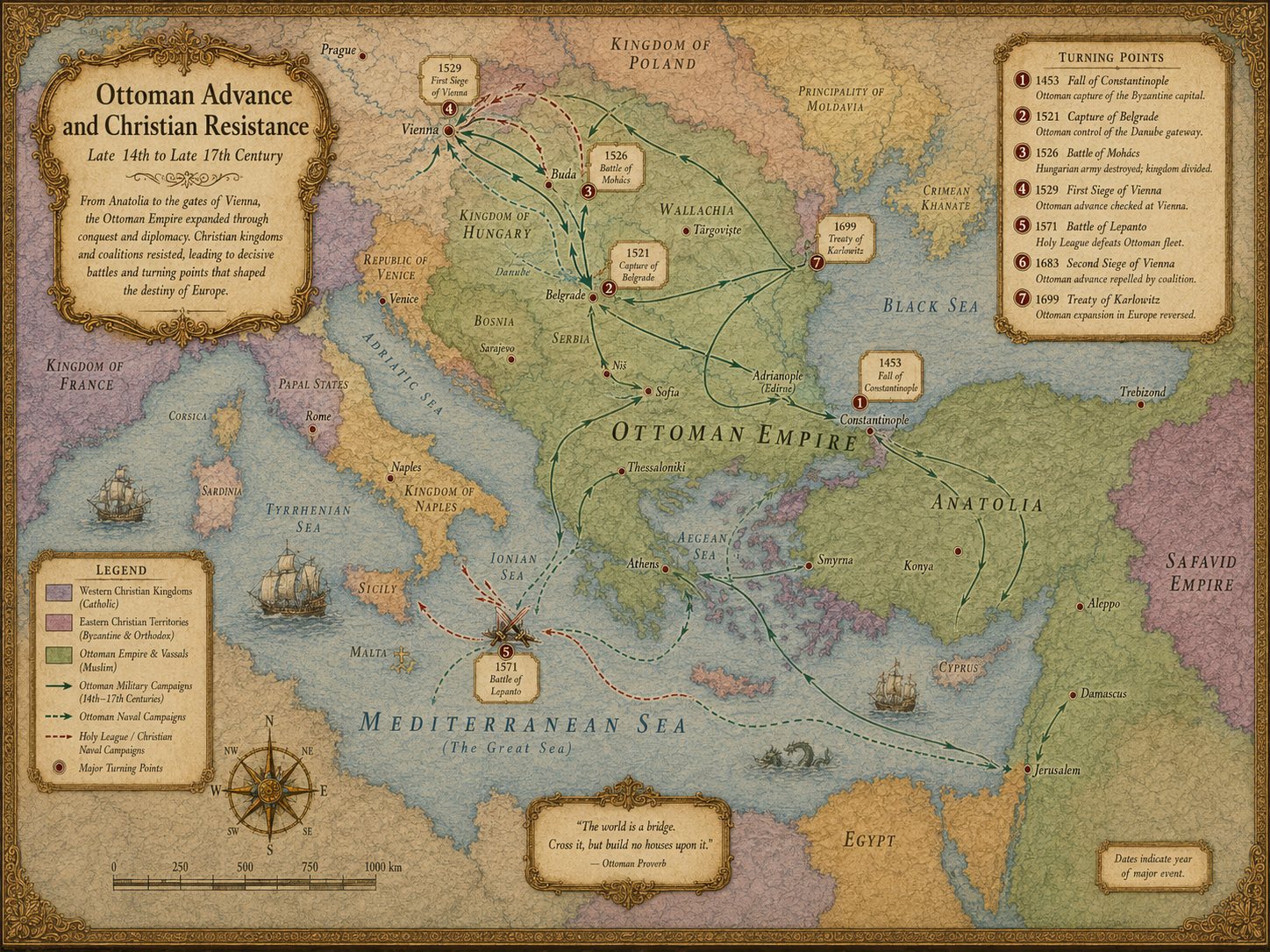
From comparison to judgement
Islam confesses one Creator and imposes disciplines of prayer, fasting and almsgiving, but these facts do not authenticate Islam as a revealed religion. Its denial of the Trinity, Incarnation, Cross and Resurrection contradicts the prior apostolic witness and rejects the very act by which God reconciles mankind. Justice toward Muslim persons forbids hatred, private vengeance and arbitrary coercion; error itself has no moral right, civil toleration is prudential, and the Church must openly preach Christ and seek conversion.
WHAT THIS MEANS FOR YOUR SEARCH
Islam repeats certain truths already knowable by natural reason or received from earlier biblical revelation, but borrowed or inherited truths do not authenticate Islam. Its denial of the Trinity, the Incarnation, the redemptive Cross and the Resurrection contradicts the earlier public revelation it claims to correct. The complete revelation is not a later book about Christ but the incarnate Word Himself.
This judgement concerns propositions and evidence, not the human worth of every person who holds them. Truth, personal culpability and pastoral charity must be distinguished without treating contradictory claims as equally true.