
1 · UNDERSTAND
What evidence is used?
Canonical texts, church orders, episcopal letters, apologies, anti-heretical works, liturgical descriptions, inscriptions, martyr acts and succession lists.
Fides apostolica · doctrina, cultus et ordo
The question of the Church cannot be settled by imagining what primitive Christianity ought to have been. It must be reconstructed from the New Testament, the Didache, Clement, Ignatius, Justin, Irenaeus, Tertullian, Hippolytus, Cyprian, early liturgies and martyr acts in chronological order.
The evidence is not uniform in vocabulary or completeness. The New Testament, the Didache, Clement, Ignatius, Justin and Irenaeus must first be heard individually: who speaks, to whom, and about which controversy? Together they provide a substantial pre-Constantinian record of baptism, Eucharist, ministry and apostolic tradition. The fuller Catholic interpretation is then argued from that record, rather than placed inside every early phrase in advance.
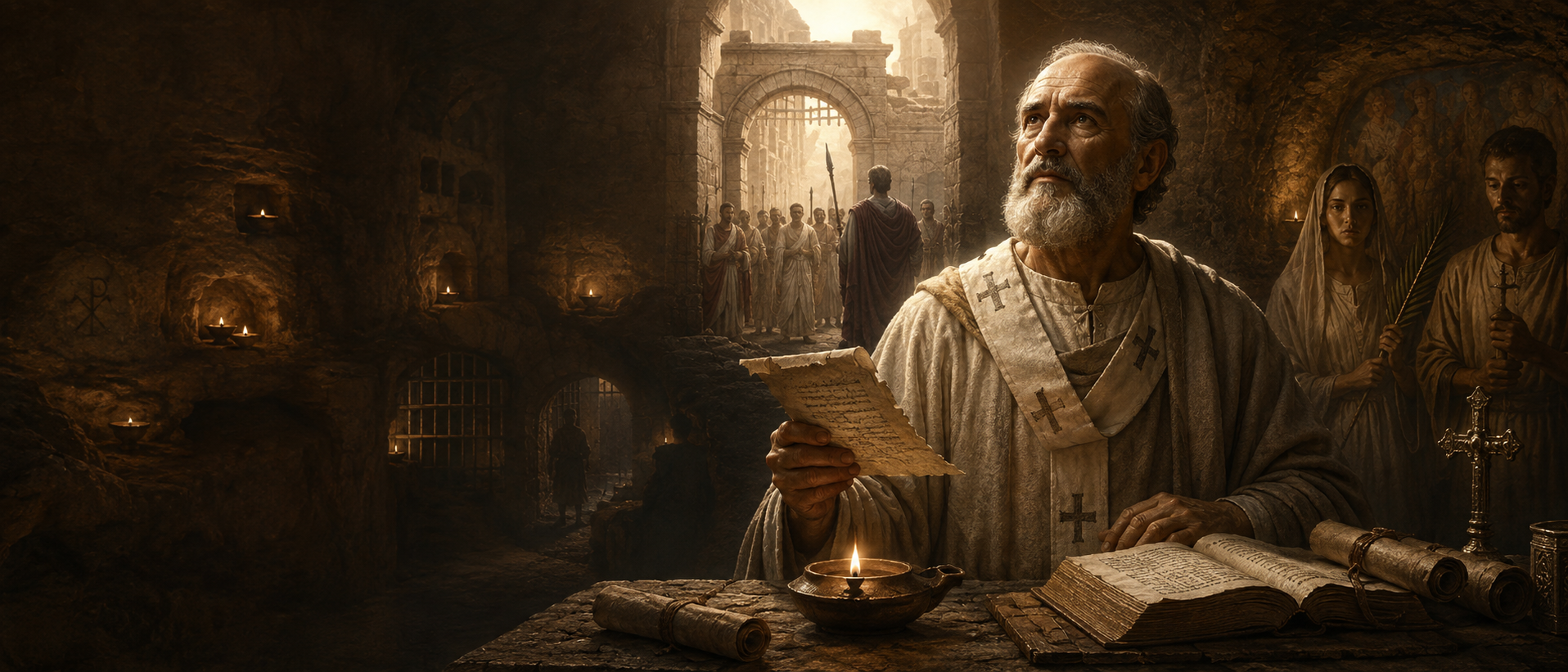
START HERE · FOR THE SEARCHER
Read by date, genre and region. Give greater weight to public liturgy, disciplinary practice and witnesses close to the apostles than to late reconstructions. Distinguish what is explicit, what is presupposed and what develops in terminology.
1 · UNDERSTAND
Canonical texts, church orders, episcopal letters, apologies, anti-heretical works, liturgical descriptions, inscriptions, martyr acts and succession lists.
2 · WHY IT MATTERS
A community may formulate doctrine briefly while revealing its actual faith through baptismal rites, Eucharistic discipline, ordination, penance and the authority it obeys.
3 · WHERE THE EVIDENCE LEADS
That the first centuries already possess the essential Catholic pattern, although later theology and canon law articulate it with greater precision.
READ IN THIS ORDER
The optional layer is for catechists, apologists and readers who want the premises, source hierarchy and strongest contrary case stated explicitly.
SOURCE HIERARCHY
Chronological proximity matters, but public reception and independence of witnesses matter as well.
Open this part of the inquirySACRAMENTAL EVIDENCE
Baptismal, Eucharistic and penitential practice often carries more evidential weight than a passing abstract phrase.
Open this part of the inquiryECCLESIAL EVIDENCE
The central question is whether visible order is local improvisation or a received apostolic norm.
Open this part of the inquiryCONTRARY CASE
The strongest objection argues that later catholicity selected one stream among many primitive Christianities.
Open this part of the inquiryProfile
The label first Christians includes several layers: the apostolic generation, near-apostolic witnesses, the second-century apologists and anti-heretical writers, and the third-century churches before imperial toleration. Their evidence must be ordered rather than merged.
Normative source
The rule of faith is received from Christ through the apostles in oral and written transmission.
Initiation
Conversion enters a sacramental process of rebirth, forgiveness, Spirit and ecclesial incorporation.
Central worship
The community gathers for readings, prayer, offering, thanksgiving, communion and care of the poor.
Ministry
Offices are connected to teaching, Eucharist, discipline, charity and unity.
Reconciliation
Serious post-baptismal sin is neither ignored nor treated as purely private; ecclesial reconciliation develops visibly.
Public witness
Confessors and martyrs testify to bodily resurrection, exclusive worship of God and fidelity to Christ.
Communion
Churches recognize one another, exchange ministers and intervene across local boundaries.
Controversy
Heresy forces clearer articulation of canon, rule of faith, succession and sacramental realism.
The page does not claim that every disputed later custom is fully documented in the year 100. It asks whether the essential Catholic organism is already present: creed, sacrament, hierarchy, succession and visible unity.
Confidence labels should follow the evidence: explicit, strongly implied, probable or later developed. Historical honesty strengthens rather than weakens the cumulative case.
Method
Primitive-Christian arguments fail when they collect isolated sentences without asking who wrote them, to whom, for what purpose and within what public practice. The method below prevents both Catholic proof-texting and revisionist fragmentation.
Acts and the Epistles already show baptism, Eucharist, laying on of hands, anointing, confession, ordained ministry, discipline and transmission. The later witnesses are not asked to create these realities but to show how they were received.
The New Testament is itself internally diverse in genre. Narrative, pastoral instruction and polemic must be synthesized without pretending every book gives a complete church order.
The Didache 7, 9–10 and 14–15 gives instructions about baptism, thanksgiving, the Lord’s Day assembly and the appointment of bishops and deacons. 1 Clement 42–44 argues about displaced ministers at Corinth. Ignatius, Smyrnaeans 7–8 joins his defence of Christ’s real flesh to Eucharistic belief and ecclesial unity. Compare their actual terminology before treating them as three copies of one later manual.
Their value lies not only in proximity but in ordinary presuppositions. They often state institutional realities because a crisis requires them, not because they are inventing them.
Justin’s Apologies explain baptism and Sunday Eucharist to outsiders. Because he intends intelligibility and defence, his account gives an unusually public description of worship around the middle of the second century.
Liturgical evidence must be read as enacted theology: who may receive, what the gifts are called, who presides and how the offering is understood.
Irenaeus does not answer Gnostics by appealing only to private exegesis. He invokes the public rule of faith, apostolic churches, succession of bishops and the universally confessed Eucharistic and incarnational faith.
This method is especially important because it shows what counted as an authoritative criterion before the fourth-century councils.
Rome, Asia Minor, Syria, Gaul and North Africa differ in vocabulary, calendar disputes and disciplinary severity. Diversity is real and cannot be concealed.
Yet diversity operates within recognizably shared boundaries: one Creator, real Incarnation, apostolic Scriptures, baptism, Eucharist, ordained ministry and communion.
Later terms such as sacramental character, transubstantiation or universal ordinary jurisdiction should not be put verbatim into early mouths. The historian asks whether the realities those terms protect are present in seed and practice.
A mature oak is not identical in appearance to an acorn, but it is intelligibly the same organism. The analogy is valid only where continuous principles and subject can be demonstrated.
Chronological control
The chronology shows that the Catholic pattern does not first appear after Constantine. It becomes progressively explicit under persecution, controversy and ordinary pastoral need.
Baptism, breaking of bread, apostolic doctrine, discipline and missionary appointment appear in the New Testament.
Paul transmits earlier material on Eucharist and Resurrection and orders ministers and discipline.
Christology, sacramental language, church discipline and succession become more explicit.
Moral catechesis, baptism, fasting, Eucharistic prayer and ministry are arranged for communities.
Rome appeals to apostolic order and succession in the Corinthian ministry crisis.
Bishop, presbytery, deacons, real Eucharist and visible unity are repeatedly joined.
Apostolic memory, moral discipline and public confession continue under persecution.
Baptism, Sunday liturgy and Eucharistic realism are explained publicly in Rome.
Canon, rule of faith, succession, Rome and Eucharistic-incarnational doctrine answer Gnosticism.
Prescription, baptism, penance, ordination and liturgical order receive detailed treatment.
Episcopal collegiality, unity, penance and Roman communion are debated amid persecution.
The pre-existing episcopal Church emerges into legal freedom and can deliberate universally at Nicaea.
How to reach a judgement
Stage I establishes what the earliest evidence actually contains. Stage II synthesizes the Catholic pattern and explains why later doctrinal precision is development within the same apostolic subject rather than replacement by another religion.
FIRST QUESTION · REASON AND PUBLIC HISTORY
The strongest case does not depend on every source saying everything. It asks whether independent sources converge on the same essential form and whether contrary reconstructions explain the ordinary public evidence better.
New Testament language of rebirth, forgiveness, burial and rising with Christ continues in early baptismal catechesis and ritual. Water, Trinitarian confession, fasting and ecclesial admission are not marginal symbols.
Debates about emergency baptism, heretical baptism and post-baptismal sin presuppose that baptism has objective ecclesial and sacramental effects.
Io. 3:3-5 · Act. 2:38 · Rom. 6:3-4In Smyrnaeans 7, Ignatius describes opponents who abstain from the Eucharist because they do not confess it as the flesh of the Saviour who suffered and was raised. Justin, First Apology 66 likewise distinguishes the Eucharistic food from ordinary food and links it with the incarnate Christ. These are positive witnesses to Eucharistic realism. Neither passage alone states every later distinction about substance, accidents or sacrificial offering.
First Apology 65–67 connects admission to the Eucharist with shared belief, baptism and Christian life, and describes prayer, distribution by deacons and assistance to those in need. The argument is stronger when the doctrinal words are read with this practice. It also matters to distinguish the claim that worship has sacrificial significance from a completed account of precisely how the Mass is a sacrifice.
1 Clement 44 says the apostles provided for approved successors and objects to the unjust removal of blameless ministers. The passage speaks of overseers and presbyters without reproducing Ignatius’ terminology in every detail. Smyrnaeans 8 clearly distinguishes bishop, presbytery and deacons. Both support ordered ministry; the difference warns against assuming identical local structures on the strength of an English title alone.
Vocabulary and local timing may vary, but the trajectory is toward a received, public and sacramentally connected ministry rather than charismatic independence.
1 Clem. · Ign., Smyrn.The Shepherd of Hermas, Tertullian and Cyprian reveal debates about the possibility, severity and administration of post-baptismal reconciliation. The controversy itself is evidence that grave sin concerns communion with the Church.
Later canonical forms should not be projected backwards, but neither may early penance be reduced to private remorse without ecclesial judgement.
Hermas, Pastor · Tert., De paen. · Cypr., Ep. IX (ANF)The opponents addressed by Irenaeus, Against Heresies III.3.1–4 claim access to teaching outside the churches’ public apostolic inheritance. Irenaeus replies that the apostles would have entrusted essential teaching to the ministers who succeeded them. He gives the Roman succession and also points to Polycarp and Ephesus. His argument concerns the content transmitted through office, not an ordination list divorced from what its holders taught.
The method assumes that true Christianity is historically traceable and socially identifiable.
1 Clement 1 and 42–44 presents the church at Rome addressing a crisis at Corinth. Ignatius’ Letter to the Romans, greeting speaks of the Roman church in distinctive terms. Irenaeus III.3.2–3 appeals to Rome as a pre-eminent public witness. These data support more than local isolation. How their authority relates to later definitions of universal jurisdiction requires an argument, including attention to the wording and setting of each passage.
The evidence should be neither exaggerated into a fully developed later canon-law manual nor minimized into mere honour without ecclesial consequence.
Martyrs refuse idolatrous worship, confess Christ and expect bodily resurrection. Their deaths do not logically prove every proposition, but they establish sincerity and the public cost of the confession.
Martyr cult, anniversaries and relics also reveal an early ecclesial memory of communion with the victorious witnesses.
SECOND QUESTION · THE FULL CATHOLIC ANSWER
The synthesis must avoid two extremes: pretending every later formulation is verbally complete in the first century, and treating every increase of precision as corruption. Identity is judged by enduring principle, subject and direction of development.
QUAESTIO
Ignatius joins the Eucharist, bishop and unity; Clement joins ministry to apostolic succession; Irenaeus joins Scripture, rule of faith, public succession and universal churches. These are pre-Constantinian and arise in communities claiming apostolic continuity.
Therefore the essential Catholic pattern cannot be explained as a fourth-century imperial construction.
Corruption destroys or reverses the principle of a thing; development unfolds its implications and equips the same subject to answer new conditions. Primitive Christianity contains the principles of Catholic doctrine and order: a Trinitarian and incarnational rule of faith, sacramental initiation and Eucharist, ordained ministry, disciplinary authority, public tradition and inter-church communion.
Later dogmatic terms and canonical structures are legitimate insofar as they preserve these realities against denial and order their exercise. The historian must test each development rather than assume either universal innocence or universal corruption. Yet the burden of proof lies heavily upon a theory that places the essential Catholic form centuries late, because its core elements are already independently attested by the second century.
The next question is longitudinal: whether this apostolic organism remains the same through councils, schisms, reforms and doctrinal definitions.
Baptismal rebirth, Eucharistic communion and ecclesial penance presuppose that grace is given through visible acts of Christ’s body.
This sacramental realism coheres with the Incarnation: matter is not despised but assumed and used as an instrument of divine life.
The bishop is not presented as a new source of revelation. His office serves the received Gospel, altar and communion and is judged by fidelity to them.
This explains why heretical bishops can be condemned and why succession is doctrinal as well as genealogical.
The early evidence does not give every later jurisdictional formula, but it repeatedly places Rome inside disputes of universal communion and appeals to Peter and Paul.
A legitimate doctrine of primacy must explain both early Roman significance and the collegial reality of the episcopate.
Anniversary celebration, burial honour and preservation of relics arise from belief in resurrection and the unity of Christ’s body, not from pagan deification of the dead.
The distinction between adoration owed to God and honour given to His servants is doctrinally clarified as practice develops.
Patristic synthesis
No single pre-Nicene text is a modern catechism. The apostolic pattern emerges by converging Scripture, liturgy, discipline, martyrdom and episcopal testimony. Reading the sources cumulatively prevents both anachronism and the selective use of one isolated sentence.
Early texts survive unevenly and answer particular occasions. Ignatius writes under arrest about unity and false teaching; Justin explains worship to an emperor; Irenaeus combats gnostic succession claims; Cyprian addresses discipline and episcopal communion. A practice may therefore be explicit in one region and merely presupposed elsewhere. Silence in a short letter is not proof of absence, especially when the genre has no reason to catalogue the whole faith. Positive evidence must be dated, located and compared before conclusions are drawn.
Confidence should be attached to specific claims. Justin explicitly describes Eucharistic admission and distribution; Ignatius explicitly distinguishes bishop, presbyters and deacons in the churches he addresses. It is a further inference to extend every feature to every church at the same date. Conversely, a later technical term does not prove a later invention of the reality: compare its meaning with the earlier texts, and state which part of the comparison is historical evidence and which is Catholic theological interpretation.
Baptism is not treated as a bare badge. It is joined to remission, new birth, illumination, incorporation and the gift of the Spirit. The Eucharist is not ordinary food or a mental recollection; Christians gather on the Lord’s Day, offer thanksgiving, receive what they confess as Christ’s body and blood, and exclude those outside faith and baptism. Penance after baptism, anointing of the sick, laying on of hands, ordained ministry and Christian marriage appear within one life of grace and discipline.
The sources use varied language because theological terminology is still being stabilized, but their practical logic is consistent. Sacred actions have effects because Christ acts through the Church; ministers are not self-appointed; communion has doctrinal and moral boundaries; worship carries sacrificial language; and unity at the altar corresponds to unity with the bishop. This pattern is difficult to derive from a Christianity consisting only of private faith, symbolic ordinances and locally autonomous congregations.
The New Testament shows development in terminology while also showing appointment, laying on of hands, entrusted teaching and responsibility for local churches. By the early second century Ignatius assumes a recognizable bishop-presbyter-deacon order across communities in Asia Minor and writes as though unity with the bishop is a normal ecclesial criterion. Clement appeals to an apostolic plan of succession when disorder at Corinth removes duly appointed ministers. Irenaeus later uses public episcopal lists against secret gnostic lineages.
Succession is not magical transmission independent of doctrine. It is a public chain of office ordered to preserve apostolic teaching, sacrament and communion. Conversely, doctrine without an identifiable bearer leaves every generation to recreate authority from texts. The early Catholic synthesis joins both: the rule of faith is public, Scripture is read within the churches, bishops succeed to pastoral office, and communities recognize one another through communion. Heresy is not merely an unpopular opinion; it ruptures a received ecclesial rule.
Martyrs reveal what Christians believed worth dying for. Their acts and commemorations display confession of Christ’s divinity, hope in bodily resurrection, Eucharistic fellowship, prayer, episcopal care and the memory of holy witnesses. Veneration of relics and anniversaries is not the worship of rival gods; it arises from belief that the bodies of Christ’s members await resurrection and that death does not sever the communion created by grace. These practices give social form to doctrines otherwise known from treatises.
Roman evidence must be neither exaggerated nor minimized. The Roman church is associated with Peter and Paul, intervenes early beyond its immediate locality, becomes a reference point for apostolic tradition and is described in language of pre-eminent communion. Not every first-century detail of later papal administration is explicit, and disputes show that exercise could be contested. Yet the data do not resemble a federation with no visible universal centre. They prepare the next question: whether this apostolic pattern remained historically continuous rather than disappearing after the age of the Fathers.
Difficult questions
The objections challenge date, diversity, textual reliability and the legitimacy of development. They deserve source-specific answers rather than appeals to later authority alone.
Early diversity is undeniable.
Objection stated at full strength. Catholic orthodoxy won a later political contest among equally original versions.
Catholic reply. Diversity of emphasis and local discipline does not imply equal apostolic pedigree. Proto-orthodox sources possess broad geographic spread, continuity with apostolic writings, public succession and sacramental coherence, while many rivals appear later and claim secret revelation.
Necessary distinction. Distinguish diversity within a rule of faith from contradictions that create another Christ or God.
His episcopal language is unusually strong.
Objection stated at full strength. Ignatius’ letters press unity with a single bishop very strongly. Could this urgency indicate a contested or still developing arrangement? A leader’s demand that Christians obey is not, by itself, proof that all churches already accepted the same institutional form.
Catholic reply. The letters name bishops and address existing presbyters and deacons; they are not merely a proposal to create unknown offices. That makes the institution concrete in the communities addressed. Yet the demand for obedience also reveals tensions, and Clement and the Didache require their own analysis. The sound conclusion is that this form of episcopal unity is attested early and in several churches; its universal distribution and apostolic origin need the broader historical case.
Necessary distinction. Distinguish intensity of witness from uniqueness of the institution witnessed.
Ancient rhetoric can be vivid.
Objection stated at full strength. Flesh and blood language need not imply real presence.
Catholic reply. Ignatius uses Eucharistic realism specifically against docetism; Justin distinguishes consecrated food from common food; Irenaeus bases bodily resurrection upon Eucharistic participation. The converging contexts exceed bare memorial symbolism.
Necessary distinction. Distinguish sign from empty sign; sacramental signs can effect and contain what they signify.
Autographs are lost.
Objection stated at full strength. Patristic manuscripts are too late to establish second-century belief.
Catholic reply. Textual transmission must be evaluated work by work. Multiple manuscript traditions, ancient translations, quotations and known reception often establish the substantial text. Copy date is not composition date.
Necessary distinction. Distinguish age of surviving manuscript from date of the work it transmits.
Some early texts do not mention Rome, penance or anointing.
Objection stated at full strength. Silence can matter when an author is explaining church authority or worship in detail. If a supposed universal requirement is repeatedly absent from relevant discussions, that absence needs an explanation. The objection need not claim that every short letter must contain a whole catechism.
Catholic reply. Ask first whether this author’s purpose would normally call for the disputed point, then whether the surviving text is complete and independent of other witnesses. Silence in a brief greeting weighs little; sustained silence in a detailed account can weigh more. Positive evidence may answer it, but merely calling a doctrine implicit does not do so. This rule must be applied consistently to evidence favourable and unfavourable to the Catholic account.
Necessary distinction. Distinguish silence in a relevant exhaustive context from silence caused by genre and purpose.
The ancient world had initiations and sacred meals.
Objection stated at full strength. Christian baptism and Eucharist are borrowed religious technologies.
Catholic reply. Jewish purification, Passover, covenant, Temple and Jesus’ commands provide the immediate matrix. Superficial analogies do not establish dependence, especially where theology and chronology differ.
Necessary distinction. Distinguish resemblance of external form from causal borrowing and identity of meaning.
Later Roman claims are fuller than first-century texts.
Objection stated at full strength. Early Roman prominence might be explained by apostolic prestige, the capital’s position and practical coordination. How does one distinguish those explanations from an inherited office of universal jurisdiction? Calling the later institution a development does not yet show that the development is legitimate.
Catholic reply. Roman letters, appeals and succession arguments should be examined for what authority is claimed, how other churches respond and whether disputed exercises are criticised as excessive or rejected in principle. The Catholic case adds the Petrine texts to that history. It cannot be completed by Rome’s importance alone; neither should concrete acts of trans-local responsibility be erased simply because their terminology is not yet that of Vatican I.
Necessary distinction. Distinguish primatial principle from mature juridical articulation.
Martyr sources emphasize heroic elites.
Objection stated at full strength. They do not reveal ordinary Christianity.
Catholic reply. Martyr acts must be balanced with liturgy, pastoral letters, catechesis and discipline. Together they show both ordinary communal life and the ultimate commitments for which members suffered.
Necessary distinction. Distinguish exceptional witness from the ordinary institutions that prepared and commemorated it.
Verify the answer
The sources are arranged from canonical baseline to near-apostolic letters, liturgy, apologetics and anti-heretical synthesis.
Apostolic worship, ministry, discipline and transmission.
Open sourceAct. 6:1-6 · 1 Tim. 3:1-13 · Tit. 1:5-9Catechesis, baptism, fasting, Eucharistic prayer and ministers.
Open sourceRoman intervention, apostolic order and succession.
Open sourceIncarnation, Eucharist, bishop and visible unity.
Open sourceApostolic memory and public martyr witness.
Open sourcePolycarp., Phil. · Mart. Polycarp.Baptism and Sunday Eucharist described to outsiders.
Open sourceRule of faith, canon, succession, Rome and Eucharist.
Open sourcePublic apostolic churches against private innovation.
Open sourceOrdination, initiation and liturgical discipline.
Open sourceCatalogue: the cited text is not yet available in the internal reader.Episcopate, unity, penance and persecution.
Open sourceCypr., De unit. · Cypr., Ep. IX (ANF) · Cypr., Ep. LXIX (ANF)Further dossiers
Each dossier isolates one evidential cluster while the main page preserves the overall synthesis.
Martyrs, liturgy and public memory
Source-led studyA source-led gateway to pre-Constantinian Christian life.
The canonical documentary base
Source-led studyText, variants, canon and authorship.
Institution in the New Testament
Source-led studyApostles, Peter, sacraments and authority.
From early witnesses through councils and schisms
Source-led studyHistorical identity of doctrine, ministry and communion.
Primary texts by author and work
Source-led studyIgnatius, Justin, Irenaeus, Tertullian, Cyprian and others.
Public doctrinal judgement
Source-led studyHow the episcopal Church defines contested apostolic teaching.
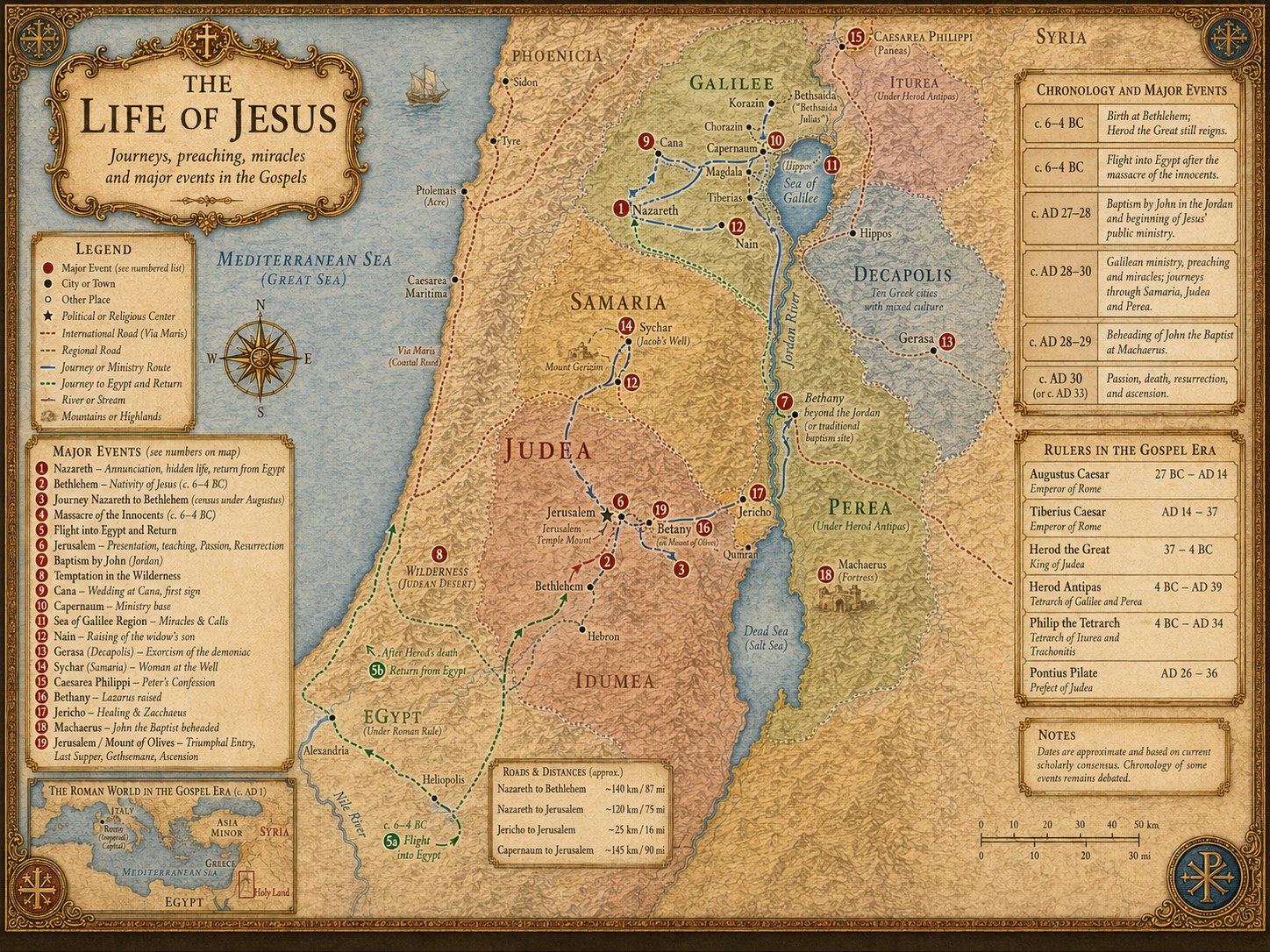
WHAT THIS MEANS FOR YOUR SEARCH
The first Christian evidence is not a random collection of private interpretations. It shows creed, baptism, Eucharist, ordained ministry, penance, succession, martyr witness and trans-local communion in organic relation.
The next question is whether this same subject continues through later centuries. Continuity must be tested across councils, doctrinal definitions, Roman primacy, schisms, reform and scandal without confusing growth with either perfect stasis or corruption.
The judgement concerns propositions and evidence. Personal culpability, pastoral patience and charity must be distinguished from the objective truth of a religious claim.