
1 · UNDERSTAND
What is the disputed claim?
The Pneumatomachian controversy concerned whether the Holy Spirit is fully divine or a ministering creature.
Christian Ruptures · Doctrinal History · Long dossier
Does the proposed language preserve the one divine essence together with the real and eternal distinction of Father, Son and Holy Spirit?
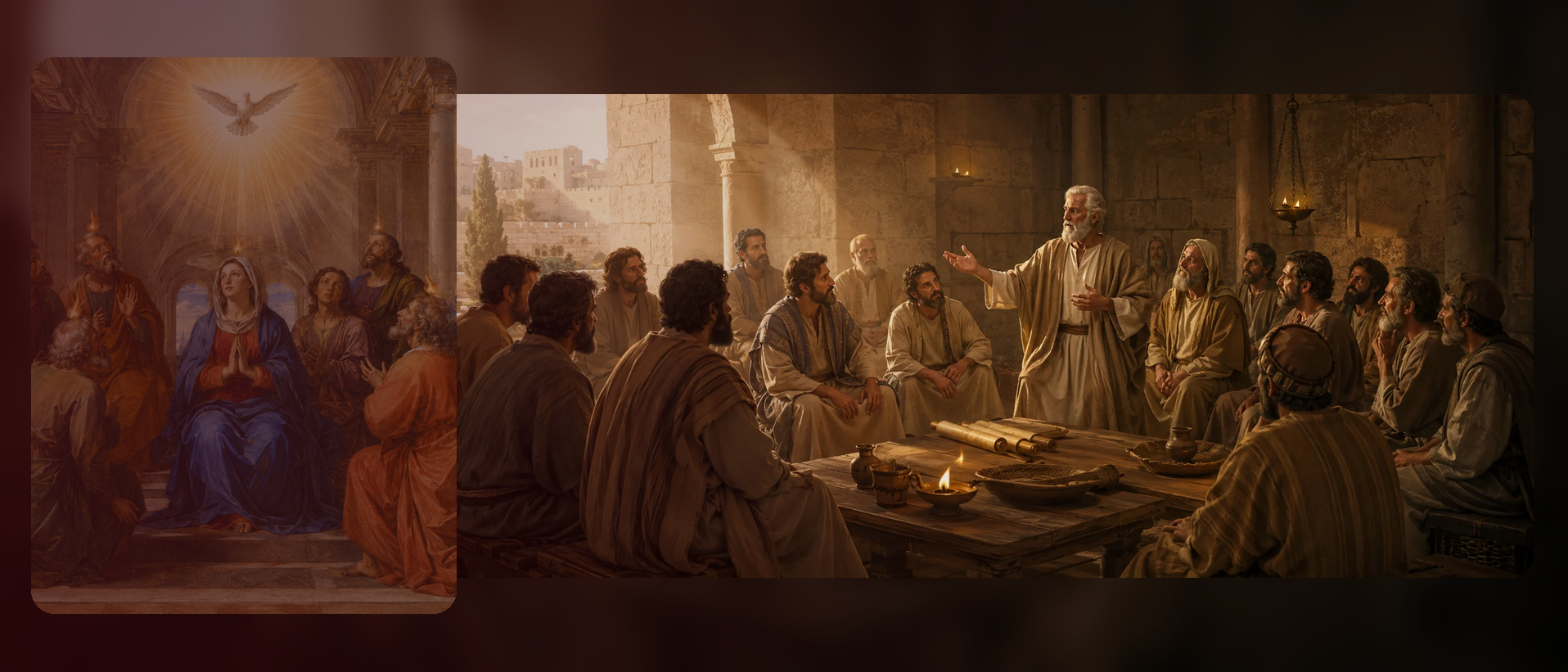
START HERE · FOR THE SEARCHER
This study states the movement’s claim and identifies any Catholic doctrine, biblical text or sacramental form that it still uses. It then tests the point of departure, chronology, authority claim and contradiction with the apostolic rule of faith. The survival of a Catholic element does not justify the separation or the errors joined to it.
1 · UNDERSTAND
The Pneumatomachian controversy concerned whether the Holy Spirit is fully divine or a ministering creature.
2 · WHY IT MATTERS
A disputed formula about God, Christ or grace changes the object of faith and the meaning of salvation. Christian vocabulary alone cannot preserve truth when its content is altered.
3 · WHERE THE EVIDENCE LEADS
The Pneumatomachian controversy concerned whether the Holy Spirit is fully divine or a ministering creature. The doctrine protects Christian worship and sanctification: only God can communicate divine life as the Spirit does.
READ IN THIS ORDER
This optional layer verifies the conclusion instead of merely repeating it. It identifies the controlling terms, dates the decisive witnesses, links the primary texts and states which premise the strongest contrary case must deny.
TERMS AND SCOPE
The Son’s obedience and the Spirit’s mission describe the economy of salvation and relations of origin; they do not imply a lesser divine nature. In Macedonianism and the Pneumatomachi, the distinction governs how the following evidence is read: The Pneumatomachian controversy concerned whether the Holy Spirit is fully divine or a ministering creature.
Open Key terms in ordinary languageCHRONOLOGICAL CONTROL
Date the proposition, its earliest surviving witnesses, the controversy that forced clarification, and the council or ecclesiastical judgement. Later political uses or modern reconstructions cannot replace the doctrine actually asserted and condemned.
Open What happened, in chronological orderPRIMARY EVIDENCE
For Macedonianism and the Pneumatomachi, the source sequence beginning with On the Holy Spirit states both documentary use and evidential limit.
Open What the earliest and official sources actually saySTRONGEST CONTRARY CASE
The replies on Macedonianism and the Pneumatomachi return each inference to On the Holy Spirit and to a specific evidential control: Constantinople I confesses the Spirit as Lord and giver of life, proceeding from the Father and glorified with Father and Son.
Open The strongest replies considered fairlyDegree of certainty. Dates, texts and institutional acts are judged with historical or documentary certainty. Once the relevant Catholic doctrine is established from Scripture, Tradition and the Church’s judgement, a contradictory proposition is false; conjectures about private motives receive no such certainty.
Start with the claim
The Pneumatomachian controversy concerned whether the Holy Spirit is fully divine or a ministering creature. The main first-party source is On the Holy Spirit (c. 375), especially doxology, divine operations and the Spirit. It is read in its own historical setting before later interpretations are considered.
Does the proposed language preserve the one divine essence together with the real and eternal distinction of Father, Son and Holy Spirit? The decisive documentary datum is this: Constantinople I confesses the Spirit as Lord and giver of life, proceeding from the Father and glorified with Father and Son.
A historical heresy is not reconstructed from a slogan alone. Direct fragments, sympathetic evidence where available, contemporary refutations, conciliar texts and modern critical history must be compared. Technical labels are applied with chronological caution. Begin with this concrete point: The doctrine protects Christian worship and sanctification: only God can communicate divine life as the Spirit does.
The comparison begins with On the Holy Spirit (c. 375), especially doxology, divine operations and the Spirit, and tests it against Nicene-Constantinopolitan Creed (325 / 381). Each source is weighed according to its genre, date and authority.
Two distinctions govern close reading here: ‘person from essence’ and ‘generation from creation’. You should also note the exact proposition, earliest secure witness, claimed authority and practical doctrinal consequence before weighing contrary evidence.
Both explanations must account for the same public evidence. Catholic continuity must be documented rather than presumed, and the alternative must explain the same public apostolic evidence. The first practical task is to collect the full scriptural predication rather than isolated proof texts.
The central question
The Catholic answer can now be stated clearly: Nicene doctrine is not a fourth-century replacement of Scripture but a grammatical boundary drawn from baptism, worship and the canonical pattern: the Father is God, the Son is God, the Spirit acts and is glorified as God, yet God is one. In this case the evidence includes: Basil’s argument integrates baptismal formula, doxology, sanctifying action and scriptural titles rather than relying on one isolated verse.
The dispute turns in part on the distinction between person from essence and generation from creation. Without that distinction, a real datum can be made to support conclusions that do not actually follow from it: Constantinople I confesses the Spirit as Lord and giver of life, proceeding from the Father and glorified with Father and Son.
The doctrine protects Christian worship and sanctification: only God can communicate divine life as the Spirit does.
A coherent account must explain On the Holy Spirit, Nicene-Constantinopolitan Creed and the relevant scriptural passages by the same evidentiary rule; it may not change that rule when the conclusion becomes difficult.
The central question is: Does the proposed language preserve the one divine essence together with the real and eternal distinction of Father, Son and Holy Spirit? The question is sharpened by an established datum: The Pneumatomachian controversy concerned whether the Holy Spirit is fully divine or a ministering creature.
Plain language
The Son’s obedience and the Spirit’s mission describe the economy of salvation and relations of origin; they do not imply a lesser divine nature. In Macedonianism and the Pneumatomachi, the distinction governs how the following evidence is read: The Pneumatomachian controversy concerned whether the Holy Spirit is fully divine or a ministering creature.
Tested against On the Holy Spirit.
A mystery exceeds created comprehension while remaining coherent; contradiction affirms and denies the same predicate in the same respect. In Macedonianism and the Pneumatomachi, the distinction governs how the following evidence is read: Basil’s argument integrates baptismal formula, doxology, sanctifying action and scriptural titles rather than relying on one isolated verse.
Tested against On the Holy Spirit.
Essence answers what God is; person answers who subsists in the one divine nature. Distinguishing them avoids both tritheism and the collapse of Father, Son and Spirit into modes. In Macedonianism and the Pneumatomachi, the distinction governs how the following evidence is read: Constantinople I confesses the Spirit as Lord and giver of life, proceeding from the Father and glorified with Father and Son.
Tested against On the Holy Spirit.
The Son is eternally begotten from the Father’s own being, not made from nothing as creatures are. Biblical sonship cannot be reduced to the status of the highest created agent. In Macedonianism and the Pneumatomachi, the distinction governs how the following evidence is read: The doctrine protects Christian worship and sanctification: only God can communicate divine life as the Spirit does.
Tested against On the Holy Spirit.
Why it can appeal
In Macedonianism and the Pneumatomachi, the countercase protects a real good within Historical Heresies: The strongest historical reconstruction asks whether later Catholic summaries flattened diverse movements, whether disputed language concealed orthodox intention, or whether political enforcement distorted theological judgement. Its strongest factual premise in this study is therefore stated without ridicule: The Pneumatomachian controversy concerned whether the Holy Spirit is fully divine or a ministering creature.
The first documentary anchor is On the Holy Spirit. Its significance in this study is: The decisive patristic argument leading into Constantinople I’s confession of the life-giving Spirit. A fair treatment reads the relevant wording at doxology, divine operations and the Spirit, identifies who issued it and when, and then asks whether the authority or interpretation claimed for it is independently authenticated.
Basil’s argument integrates baptismal formula, doxology, sanctifying action and scriptural titles rather than relying on one isolated verse. The question is whether that datum proves the larger counterclaim: The opposing position usually seeks to protect monotheism by reducing personal distinction, generation, consubstantiality or the Spirit’s divine agency.
Nicene-Constantinopolitan Creed operates at a different evidential level. It may establish a doctrinal boundary, wording, reception or later judgement, but it cannot by itself settle every causal reconstruction attached to Macedonianism and the Pneumatomachi. Constantinople I confesses the Spirit as Lord and giver of life, proceeding from the Father and glorified with Father and Son.
The doctrine protects Christian worship and sanctification: only God can communicate divine life as the Spirit does.
Collect the full scriptural predication rather than isolated proof texts; an isolated verse, scandal or abuse cannot carry the whole conclusion.
Chronology
On the Holy Spirit (c. 375), especially doxology, divine operations and the Spirit, supplies the first documentary layer selected for analysis. At this level it establishes the following datum: The Pneumatomachian controversy concerned whether the Holy Spirit is fully divine or a ministering creature.
Nicene-Constantinopolitan Creed (325 / 381) provides the second control. Read beside On the Holy Spirit, it tests whether later language clarifies, corrects or reverses the principle already in evidence. The relevant datum is: Basil’s argument integrates baptismal formula, doxology, sanctifying action and scriptural titles rather than relying on one isolated verse.
A third documentary checkpoint is Symbol and Canons of Nicaea I (325), especially Creed and anathemas. Its relevance is direct: The paradigmatic conciliar response to a doctrinal crisis concerning the Son. The source is used as a comparative control, not as a substitute for first-party evidence.
The relevant historical frame is 4th century · Trinitarian and Christological crisis. The sequence keeps On the Holy Spirit (c. 375), Nicene-Constantinopolitan Creed (325 / 381) and Symbol and Canons of Nicaea I (325) distinct. This prevents a later denominational or doctrinal system from being projected backward before its constitutive claims existed.
Constantinople I confesses the Spirit as Lord and giver of life, proceeding from the Father and glorified with Father and Son.
The doctrine protects Christian worship and sanctification: only God can communicate divine life as the Spirit does.
4th century · Trinitarian and Christological crisis
The Pneumatomachian controversy concerned whether the Holy Spirit is fully divine or a ministering creature.
Source control
The decisive patristic argument leading into Constantinople I’s confession of the life-giving Spirit.
Reception control
The normative conciliar confession of consubstantial Son and life-giving Spirit.
Documentary evidence
For Macedonianism and the Pneumatomachi, the source sequence beginning with On the Holy Spirit states both documentary use and evidential limit.
Basil of Caesarea · doxology, divine operations and the Spirit
The decisive patristic argument leading into Constantinople I’s confession of the life-giving Spirit.
Use in this study. The Pneumatomachian controversy concerned whether the Holy Spirit is fully divine or a ministering creature. In the argument over Macedonianism and the Pneumatomachi, this datum is compared with the other primary anchors rather than treated as a self-interpreting verdict.
Limit. The document fixes one layer of Macedonianism and the Pneumatomachi, namely the datum that the Pneumatomachian controversy concerned whether the Holy Spirit is fully divine or a ministering creature. It must not be made to prove every later interpretation, nor may its inconvenient wording be replaced by a smoother summary of On the Holy Spirit.
Open exact source or internal reader routeNicaea I and Constantinople I · creed and doctrinal canons
The normative conciliar confession of consubstantial Son and life-giving Spirit.
Use in this study. Basil’s argument integrates baptismal formula, doxology, sanctifying action and scriptural titles rather than relying on one isolated verse. In the argument over Macedonianism and the Pneumatomachi, this datum is compared with the other primary anchors rather than treated as a self-interpreting verdict.
Limit. Read at creed and doctrinal canons, the source supplies a controlled datum for Macedonianism and the Pneumatomachi; the conclusion still depends on its relation to Scripture, prior tradition and the public structure of the Church.
Open exact source or internal reader routeFirst Ecumenical Council · Creed and anathemas
The paradigmatic conciliar response to a doctrinal crisis concerning the Son.
Use in this study. Constantinople I confesses the Spirit as Lord and giver of life, proceeding from the Father and glorified with Father and Son. In the argument over Macedonianism and the Pneumatomachi, this datum is compared with the other primary anchors rather than treated as a self-interpreting verdict.
Limit. It establishes the wording and authority claimed by Symbol and Canons of Nicaea I; it does not automatically establish the later historical reconstruction applied to Macedonianism and the Pneumatomachi.
Open exact source or internal reader routeIrenaeus of Lyons · Books I, III and V
Combines direct reporting of Gnostic systems with the public rule of faith, succession and canonical argument.
Use in this study. The doctrine protects Christian worship and sanctification: only God can communicate divine life as the Spirit does. In the argument over Macedonianism and the Pneumatomachi, this datum is compared with the other primary anchors rather than treated as a self-interpreting verdict.
Limit. Its evidential force is documentary rather than magical: Against Heresies must still be compared with chronology, genre and contrary witnesses before it can decide Macedonianism and the Pneumatomachi.
Open exact source or internal reader routeVincent of Lérins · chapters 2 and 23
Supplies a patristic method for identifying continuity amid doctrinal controversy.
Use in this study. The Pneumatomachian controversy concerned whether the Holy Spirit is fully divine or a ministering creature. In the argument over Macedonianism and the Pneumatomachi, this datum is compared with the other primary anchors rather than treated as a self-interpreting verdict.
Limit. The source can show what Vincent of Lérins taught or remembered, but the truth and apostolic origin of that teaching remain the question under examination in Macedonianism and the Pneumatomachi.
Open exact source or internal reader routeApostles and presbyters at Jerusalem · Acts 15
The apostolic pattern joins debate, testimony, authoritative judgement and a binding letter.
Use in this study. Basil’s argument integrates baptismal formula, doxology, sanctifying action and scriptural titles rather than relying on one isolated verse. In the argument over Macedonianism and the Pneumatomachi, this datum is compared with the other primary anchors rather than treated as a self-interpreting verdict.
Limit. This witness from Apostles and presbyters at Jerusalem prevents caricature; it remains insufficient by itself because basil’s argument integrates baptismal formula, doxology, sanctifying action and scriptural titles rather than relying on one isolated verse. and a first-party claim cannot authenticate the authority on which its own system depends in Macedonianism and the Pneumatomachi.
Open exact source or internal reader routeThe biblical test
Baptism is commanded in the one name of Father, Son and Holy Spirit, while the risen Christ claims universal authority and enduring presence. The triadic formula belongs to Christian initiation before later conciliar vocabulary. Application to Macedonianism and the Pneumatomachi: The Pneumatomachian controversy concerned whether the Holy Spirit is fully divine or a ministering creature.
John distinguishes the Word from God and identifies the Word as God, creator and incarnate revealer. Any Christology must preserve both personal distinction and the uncreated divine predicates of the Logos. Application to Macedonianism and the Pneumatomachi: Basil’s argument integrates baptismal formula, doxology, sanctifying action and scriptural titles rather than relying on one isolated verse.
The Son is addressed as God, described as creator and bearer of the divine glory, and contrasted with angels as belonging to a different order. Textual details must be read within that cumulative argument. Application to Macedonianism and the Pneumatomachi: Constantinople I confesses the Spirit as Lord and giver of life, proceeding from the Father and glorified with Father and Son.
What Christianity must preserve
Nicene doctrine is not a fourth-century replacement of Scripture but a grammatical boundary drawn from baptism, worship and the canonical pattern: the Father is God, the Son is God, the Spirit acts and is glorified as God, yet God is one. Its relevance to Macedonianism and the Pneumatomachi begins with this concrete datum: The Pneumatomachian controversy concerned whether the Holy Spirit is fully divine or a ministering creature.
First, the Catholic answer preserves this truth: Collect the full scriptural predication rather than isolated proof texts. This receives what is true without treating the claim as a new rule of faith: Basil’s argument integrates baptismal formula, doxology, sanctifying action and scriptural titles rather than relying on one isolated verse.
Second, the evidence also requires this distinction: Distinguish person from essence. Applied here, it clarifies both the force and the limits of this evidence: Constantinople I confesses the Spirit as Lord and giver of life, proceeding from the Father and glorified with Father and Son.
The distinction between person from essence and generation from creation keeps the synthesis from collapsing into institutional triumphalism on one side or doctrinal relativism on the other. The doctrine protects Christian worship and sanctification: only God can communicate divine life as the Spirit does.
On the Holy Spirit and Nicene-Constantinopolitan Creed are read together because they perform different tasks. One fixes a disputed claim or historical witness; the other supplies a doctrinal, scriptural or conciliar cross-check. Neither is permitted to authenticate itself by circular appeal.
Where the evidence leads
Begin with the strongest form of the alternative claim: Basil’s argument integrates baptismal formula, doxology, sanctifying action and scriptural titles rather than relying on one isolated verse.
The Pneumatomachian controversy concerned whether the Holy Spirit is fully divine or a ministering creature.
The doctrine protects Christian worship and sanctification: only God can communicate divine life as the Spirit does.
Questions answered
The replies on Macedonianism and the Pneumatomachi return each inference to On the Holy Spirit and to a specific evidential control: Constantinople I confesses the Spirit as Lord and giver of life, proceeding from the Father and glorified with Father and Son.
Comprehension of the infinite divine essence is not required for coherent knowledge. Mystery exceeds exhaustive grasp; it does not affirm three persons and one person in the same respect.
Applied to this study. The Pneumatomachian controversy concerned whether the Holy Spirit is fully divine or a ministering creature.
Documentary control. The wording is checked against On the Holy Spirit, especially doxology, divine operations and the Spirit.
A technical word is justified when it protects the total biblical predication from an interpretation that preserves one verse by contradicting another. The issue is meaning, not verbal occurrence.
Applied to this study. Basil’s argument integrates baptismal formula, doxology, sanctifying action and scriptural titles rather than relying on one isolated verse.
Documentary control. The wording is checked against Nicene-Constantinopolitan Creed, especially creed and doctrinal canons.
Coercion must be judged morally and historically, but it does not determine whether “created” and “uncreated,” one person and two persons, or grace and autonomous nature are compatible claims.
Applied to this study. Constantinople I confesses the Spirit as Lord and giver of life, proceeding from the Father and glorified with Father and Son.
Documentary control. The wording is checked against Symbol and Canons of Nicaea I, especially Creed and anathemas.
Why it matters
Accepting the counterclaim in Macedonianism and the Pneumatomachi changes the rule of Christian certainty. The believer must identify which later confession, council, organization or prophet may correct the previously visible Church while accounting for this evidence: The Pneumatomachian controversy concerned whether the Holy Spirit is fully divine or a ministering creature.
The practical consequence is worship: whether the Father, Son and Holy Spirit confessed and adored are the one eternal God of the apostolic faith.
A second implication follows from the documentary record: Basil’s argument integrates baptismal formula, doxology, sanctifying action and scriptural titles rather than relying on one isolated verse. The conclusion therefore reaches worship, conscience, ministry or communal identity rather than remaining an abstract terminological dispute.
Constantinople I confesses the Spirit as Lord and giver of life, proceeding from the Father and glorified with Father and Son.
Historical memory is also reorganized by the claim: The doctrine protects Christian worship and sanctification: only God can communicate divine life as the Spirit does. The narrative used to justify rupture must therefore be calibrated rather than treating every earlier witness as either proto-denominational or wholly apostate.
No conclusion about Macedonianism and the Pneumatomachi licenses contempt for persons. Objective propositions, ecclesial authority and personal culpability are distinct judgements; truthful charity requires clarity about each.
Continue carefully
The Rule of Faith: Scripture, Tradition and the Teaching Church belongs beside Macedonianism and the Pneumatomachi because it tests the connected question: What public authority can identify the apostolic deposit, settle a binding controversy and remain accountable to the revelation it serves? This study contributes this datum: Constantinople I confesses the Spirit as Lord and giver of life, proceeding from the Father and glorified with Father and Son. The related study adds a distinct documentary control: The New Testament never presents Scripture, apostolic preaching and ecclesial judgement as rival authorities. The same apostles preach orally, write inspired texts, appoint ministers and require communities to hold the traditions received by word or letter.
Read the related studyDevelopment of Doctrine and the Charge of Corruption belongs beside Macedonianism and the Pneumatomachi because it tests the connected question: Does the later formulation unfold principles already present in the apostolic deposit, or does it reverse the identity of the thing previously confessed? This study contributes this datum: Constantinople I confesses the Spirit as Lord and giver of life, proceeding from the Father and glorified with Father and Son. The related study adds a distinct documentary control: A doctrine may become explicit because controversy forces the Church to distinguish meanings that earlier worship and preaching held together without technical vocabulary.
Read the related studyModalism and Sabellianism belongs beside Macedonianism and the Pneumatomachi because it tests the connected question: Does the proposed language preserve the one divine essence together with the real and eternal distinction of Father, Son and Holy Spirit? This study contributes this datum: Basil’s argument integrates baptismal formula, doxology, sanctifying action and scriptural titles rather than relying on one isolated verse. The related study adds a distinct documentary control: Modalism safeguards divine unity by treating Father, Son and Spirit as modes, names or successive manifestations rather than real eternal distinctions.
Read the related studySemi-Arianism and the Homoiousian Crisis belongs beside Macedonianism and the Pneumatomachi because it tests the connected question: Does the proposed language preserve the one divine essence together with the real and eternal distinction of Father, Son and Holy Spirit? This study contributes this datum: Basil’s argument integrates baptismal formula, doxology, sanctifying action and scriptural titles rather than relying on one isolated verse. The related study adds a distinct documentary control: Arius treated the Son as the highest creature, while later “semi-Arian” coalitions contained diverse attempts to avoid or reinterpret homoousios.
Read the related studyApollinarianism belongs beside Macedonianism and the Pneumatomachi because it tests the connected question: Does the proposed language preserve the one divine essence together with the real and eternal distinction of Father, Son and Holy Spirit? This study contributes this datum: Basil’s argument integrates baptismal formula, doxology, sanctifying action and scriptural titles rather than relying on one isolated verse. The related study adds a distinct documentary control: Apollinarius sought to secure the unity and sinlessness of Christ by assigning the divine Logos the place of the rational human mind in Jesus.
Read the related studyArianism belongs beside Macedonianism and the Pneumatomachi because it tests the connected question: Does the proposed language preserve the one divine essence together with the real and eternal distinction of Father, Son and Holy Spirit? This study contributes this datum: The Pneumatomachian controversy concerned whether the Holy Spirit is fully divine or a ministering creature. The related study adds a distinct documentary control: Arius treated the Son as the highest creature, while later “semi-Arian” coalitions contained diverse attempts to avoid or reinterpret homoousios.
Read the related studyAdoptionism belongs beside Macedonianism and the Pneumatomachi because it tests the connected question: Can the account confess one and the same divine Son as fully God and fully man without confusion, division or reduction? This study contributes this datum: Constantinople I confesses the Spirit as Lord and giver of life, proceeding from the Father and glorified with Father and Son. The related study adds a distinct documentary control: Adoptionist accounts make Jesus a man elevated, adopted or uniquely empowered rather than the eternal Son personally incarnate.
Read the related studyThe main Historical Heresies hub supplies the timeline, searchable dashboard and the remaining dossiers. For a complete judgement, compare this study with the cross-cutting treatments of the rule of faith, indefectibility and doctrinal development, because those questions determine how continuity and rupture are judged.
The evidence supports a calibrated conclusion: The Pneumatomachian controversy concerned whether the Holy Spirit is fully divine or a ministering creature. The doctrine protects Christian worship and sanctification: only God can communicate divine life as the Spirit does. That conclusion judges propositions, sources and authority claims; it does not pretend to measure the personal culpability of individual believers.
WHAT THIS MEANS FOR YOUR SEARCH
The Pneumatomachian controversy concerned whether the Holy Spirit is fully divine or a ministering creature. The doctrine protects Christian worship and sanctification: only God can communicate divine life as the Spirit does.
This judgement concerns propositions and evidence, not the human worth of every person who holds them. Truth, personal culpability and pastoral charity must be distinguished without treating contradictory claims as equally true.